Isle of Cumbrae

Home Page

The Isle of Cumbrae is situated about 1 mile off the Scottish mainland coast at the town of Largs.

There are two small car/passenger ferries that run between Largs and the Ferry Slip on Cumbrae about every half hour, all day. The only town on the island is Millport that is situated on the south side of the island, about 4 miles south of the Ferry Slip. Regular buses run between the Ferry Slip and Millport.

The fairly flat 10 mile road that runs around the island is probably Scotland's busiest cycle lane. There are a few hire shops in the town that stock 100s of cycles of every type. There is also a steep road that crosses the island at its highest point at 417 ft, for more adventurous cyclists. Many people also visit the highest point by car or by walking.

Millport has popular cafe's, bistro, hotel for meals by the pier, and bar diners.

27 Large Images . HD Video / Slide

Cumbrae Hotels B&Bs Self Catering

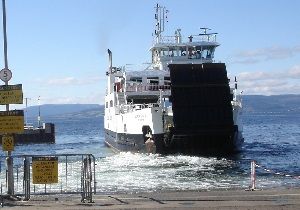
This is one of two small car/passenger ferries that make the short 8 minute crossing between Largs and Great Cumbrae every 30 minutes.

Largs to Great Cumbrae Ferry image

Prices are about £4.60 per passenger and £17.40 per car return in 2026.

There is a regular Bus Service from the Cumbrae slip that costs about £4 return to travel to the Islands town of Millport for anyone without a car or bike. Largs to Millport Map

The only town on the island, Millport, is about 4 miles south of the Ferry Slip on the Isle of Cumbrae.Ferry Website


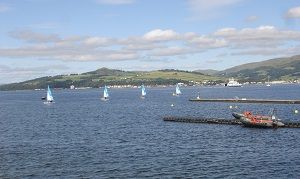
Only a few hundred yards south of the ferry slip on Cumbrae is the National Centre Cumbrae.

National Centre Cumbrae image

The centre had a variety of vessels from dinghy’s to windsurfing, sailing, kayaks and powerboats. This Centre has now closed.
nationalcentrecumbrae.org.uk . Map


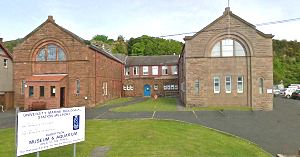
On the southeast side of Cumbrae, just before the town of Millport, is the Marine Station and Aquarium.

Robertson Museum and Aquarium image

The Station houses part of the Robertson Collection - a collection of specimens from the Clyde Sea-Area, showing the diversity of marine creatures. Tel: 01743 852 100.

Website . Map / Reviews


Between 3 and 4 miles south of the ferry slip is the town of Millport. This smallish town is mainly one long street that winds its way around Millport Bay, about 2 miles long.

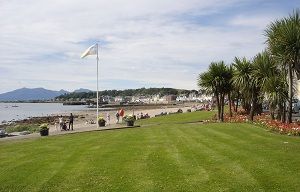
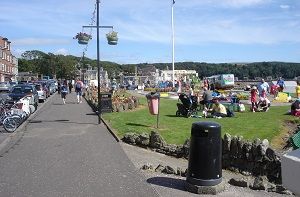
Millport Beach image

The Beach area is lined with Flower Beds and Palm Trees.

You can find popular cafe's, bistro, hotel for meals, and bar diners along this street.Large Image


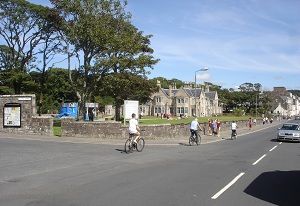
The Museum of the Cumbraes is situated in the centre of Millport overlooking the beach. The Museum is housed in the impressive looking Garrison building with a cafe, scenic gardens and a kids play area.

Museum of the Cumbraes image

The Museum of the Cumbraes displays the history of Millport and the Islands of Great and Wee Cumbrae.Website . Large Image


The Kids Play area is in the centre of town next to the beach. There are a few cafes, restaurants and bar/diners overlooking the beach area a short distance east of the pier.

Millport kids play area image

The Waverley Paddle Steamer visits Millport throughout the summer.

Waverley Info . Reviews


This is why most people visit Cumbrae. The fairly flat 10 mile road that runs around the Island is probably Scotland's busiest cycle lane.

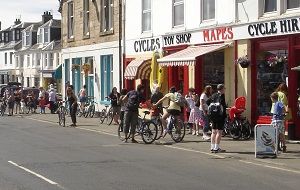
Cumbrae cyclists image

There are three hire shops in the town that stock 100s of cycles of every type. Hire prices from about £14 to £16 for a full day.

There is also a steep road that crosses the Island at its highest point at 417 feet for the more adventurous cyclist.

Cycle Hire Website . Large Image


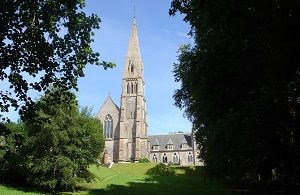
The Cathedral of the Isles is situated off College Street in the centre of Millport. This Cathedral built in 1886, is thought to be the smallest in Britain, if not Europe.
Large Image
. Map/Reviews

Cathedral of the Isles Millport image

You can visit the cathedral every day.

More Information .Website


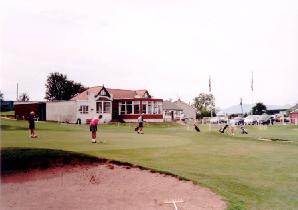
Millport Golf Club is situated off Golf Road, a short distance northwest of the town centre. Visitors are welcome with prices around £20 - £25 per round.Large Image from the First Green.

Millport Golf Club image

This 5,828-yard par 68 course has excellent views over Little Cumbrae, Arran, Bute and the Firth of Clyde. Tel: 01475 530 306

Website. Map / Reviews


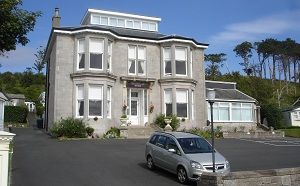
The Westbourne House Holiday Park is situated about 1 mile west of Millport with views over the Isle of Arran. Tel: 01475 530 000.

Westbourne Holiday Park Millport Isle of Cumbrae image

The holiday park has a number of caravans and a cottage for holiday lets.

Website . Reviews . Map


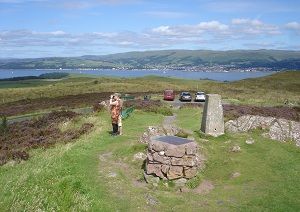
The highest point on the Island of Cumbrae is 417 feet, named Barbay Hill, with a Trig Point block. The area also has a Cairn with a Bronze Plaque on top showing the Towns, Islands and Mountains around the southwest of Scotland.

Cumbrae Highest Point image

A High Road runs from the Ferry Slip, past the Barbay Hill Viewpoint, then down into Millport past the Cathedral of the Isles on College Street.

You can visit the high point by walking, cycling, or by car, with the Viewpoint being just under 2 miles north of Millport.

Map . Large Image


Cumbrae History

Artifacts such as Stone Coffins have been found on Great Cumbrae and Little Cumbrae dating to about 4,000 years back.

700s - the village of Kirkton was where the west side of Millport is today, with an early Christian Church, where Millport Old Cemetery is situated.

800s - Vikings took control of the Western Isles of Scotland, including the Cumbraes.

1263 - the Battle of Largs led to the Vikings being forced to give up control of the Western Isles to King Alexander III.

Kings then controlled the Cumbraes with their Relations or Loyal Clans.

People on the Islands were mainly Tenant Farmers, growing crops such as Oats and Barley, rearing Cattle and Sheep, or were Fishermen.

1300s - a Royal Hunting lodge was built on Little Cumbrae with John Stewart, son of King Robert II of Scotland, being granted the lands of Cumbrae, Bute, and Arran, with that family of Stewart's later gaining the title Marquess of Bute.

1400s - Clan Hunter was looking after Little Cumbrae for the Royals, with Clan Hunter having a Castle on the south side of Largs since 1271.

1500s - Clan Boyle began taking over most of the Land on Cumbrae, with them having Kelburn Castle on the south side of Largs since the 1100s.

1515 - Clan Montgomerie was awarded control of Little Cumbrae as the King accused Clan Hunter of not protecting the Island from poachers and outlaws, with Clan Montgomerie having Castles in Ayrshire since 1361.

1520s - a Castle was built on Little Cumbrae to replace the Hunting Lodge for Clan Montgomerie, Lord Eglinton.

1650s - the Castle on Little Cumbrae was attacked and damaged by forces of Oliver Cromwell, with it then in ruin.

1600s - the village of Kames evolved around fishing on the east side of where Millport is today, at Kames Bay.

1700s - the villages of Kirkton and Kames merged, forming Millport.

1745 - Garrison House was built for Captain James Crawford in Millport so customs officers could tackle illegal smuggling in the area, as people were avoiding paying Taxes on items such as Coffee, Lace, Salt, Silk, Iron, Slate, Wood, Spices, Tea, Tobacco, Brandy, Claret, Rum, and Whisky.

1820s - Garrison House was converted to a Mansion for George Boyle, 4th Earl of Glasgow.

1833 - Millport Pier was built for the 4th Earl of Glasgow so the Clyde Paddle Steamers could bring tourists to the Island, with the George Hotel built at the Pier around that time.

There were about 40 Paddle Steamers operating around the Firth of Clyde and Islands such as Cumbrae, Bute and Arran, in the early 1900s.

1840s - Palm Trees were brought to the UK with them planted in west Scotland seaside towns such as Millport and Largs, but it is un-clear when they were first planted at Millport.

1800s mid - Clan Boyle had gained control of about two thirds of Great Cumbrae, with the Stewart's, Marquess of Bute, owning about one third.

1851 - the Cathedral of the Isles was completed in the centre of Millport, for George Frederick Boyle, 6th Earl of Glasgow, claimed to be the smallest Cathedral in the UK.

1886 - the 6th Earl of Glasgow was in debt after building Churches around Scotland, leading to the 3rd Marquess of Bute / John Crichton-Stuart, buying his land on Great Cumbrae.

1887 - the 3rd Marquess of Bute bought Garrison House.

1888 - the Cumbrae Golf Club was founded.

1897 - the Marine Station and Aquarium opened on the east side of Millport with the Robertson Museum and Aquarium.

1900 - the Cumbrae Golf Club name was changed to Millport Golf Club.

1913 - Little Cumbrae was sold to Evelyn Stuart Parker to be used as a private Island, with her having a 9 bedroom Mansion built. The Island has been sold a number of times since, can only be visited by appointments. Website.

1922 - Millport War Memorial was built by the Beach with 42 names for World War, with 19 names for World War II added later.

1936 - the first Bicycle Hire Shop opened in Millport, leading to the Island becoming famous for Cycling around the Islands fairly level coast.

1972 - Car Ferries began running between Largs and Cumbrae Slip, 4 miles north of Millport.

1976 - the Cumbrae National Watersports Centre opened at the Ferry Slip on Cumbrae.

1978 - the Museum of the Cumbraes opened in Garrison House.

1999 - John Crichton-Stuart / 7th Marquess of Bute, better known as the racing driver Johnny Dumfries, sold his land on Great Cumbrae, with Tenant Farmers given the first chance to buy their Farms.

2001 - the Garrison House Museum was damaged by Fire.

2008 - the Garrison House Museum re-opened.

2020 - the Cumbrae National Watersports Centre closed.

millport.org- Local Website

Home Page